Vidimus
Explainer videos NL Start free

How the proof works.

For anyone who wants to know exactly what happens: what is recorded, how you check it yourself, largely outside Vidimus, and what Vidimus does and does not prove.

Why your database cannot do this.

A lot of business software keeps a detailed history within its own environment (an audit trail): who, what, when, sometimes with the value before and after. That is useful. But that history sits in the same system as the data. It is not the same as anchoring a single record outside that system, which a third party recomputes for themselves.

Your systems remain the source. Vidimus adds a proof layer outside your system to the records that matter to you: a delivery, a measurement, an inspection, a photo, an agreement. The time with evidential value does not come from us.

Regular databaserecord · 1 version
sender
Verhelst Transport BV
recipient
Nova Logistics NV
packages
26 pallets · without reservation
delivered
4 September 2026, 15:12 (UTC+2)
location · device
51.2302 N · 4.4160 E · ±6 m

Neatly recorded. As it should be.

With the anchoring layerexample · anchored at 15:13:22 (UTC+2)
sender
Verhelst Transport BV
recipient
Nova Logistics NV
packages
26 pallets · without reservation
delivered
4 September 2026, 15:12 (UTC+2)
location · device
51.2302 N · 4.4160 E · ±6 m

Fingerprint fa6ca8ec… is in the anchor of 4 September 2026, 15:13:22 (UTC+2).

= word against word= calculation against word

Your system remains the source.

In three steps

No migration, no replacement. One thin layer on top of what you already have.

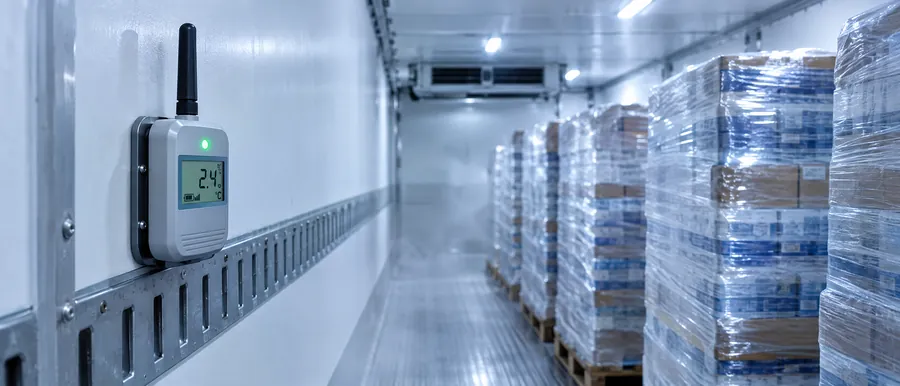
A temperature logger in a refrigerated truck reports 2.4 °C; each measurement goes straight to Vidimus

Connect

01
Source: your TMS or ERP, via API or webhook

Your system forwards each record. No system? Then the app: photo, location and signature, with a phone and a QR code, without installation. Vidimus scans and installs nothing at the customer's site: the integration is built by your vendor, your IT team or your own AI assistant. The only thing Vidimus fetches is a web address that you provide yourself to be recorded.

Anchor

02
Anchor: every five minutes, outside your system

Fingerprint and signature, anchored per five-minute group with a timestamp; groups with customer records usually also receive the qualified timestamp from GLOBALTRUST within six hours. Then into a ledger in which each link refers to the previous one: removing or changing something stands out, even if we were to do it.

Check

03
Check: public, without an account

The counterparty, an insurer, a judge, even years later. On the check page, or with the evidence bundle and its check script; the bundle remains verifiable if our platform no longer exists.

What cannot happen unnoticed, not even by us

  • Giving an earlier time or changing it afterwardsNobody can give a record an earlier anchoring time, not even us. The time in the record itself is what the device reported. The anchoring time comes from an external timestamping service and from a Bitcoin block, not from our clock. One letter different and the check shows it.
  • Signing in your name, if you hold the key yourselfWhoever signs does so with their own key: on the phone, or for your system through our SDK. If your system holds the key itself, we never see it. If you let us keep the key, that is stated in every bundle.
  • Reading your contentEverything is stored encrypted (AES‑256). If our server opens your content, for example for an evidence bundle, that shows up in your access log. Choose a confidential logbook or let your system encrypt the content itself: then the key is only with you, and Vidimus sees the fingerprint and a short envelope (type, reference, source and time), not the content. The proof remains verifiable; Vidimus then cannot show the content.

Your system records. Vidimus turns it into proof.

One demo record, really anchored

Your TMS, WMS, ERP, sensor or app records what happens. Vidimus captures selected records at the moment itself and anchors them within five minutes. That way, you, your counterparty or an auditor can later check independently whether that record has changed since it was anchored. Below is a public demo record, anchored on the live service.

  1. 01For example18 pallets of frozen goodsHalle · 29/09/2026 · 17:38:25 (UTC+2) · demo record
  2. 02AnchoredFingerprint, Merkle root and timestampsoutside your system · qualified timestamp from GLOBALTRUST at 17:38:56 (UTC+2) · this demo record belongs to Vidimus itself and the timestamp was requested manually here; for customer organisations it usually follows per group within six hours
  3. 03Checked laterUnchangedThe checked record matches what was anchored.
Technical detailsSHA-256 · Merkle · RFC 3161 · QTSA · Bitcoin
Record
reg_18838643120d · public demo record · afgeleverd_op 2026-09-29T15:38:25Z (UTC)
Fingerprint
7787f6c988fc9ff90819b300e839ad317dc561b20586b7e66220312615e657ba
Merkle root
282bf1cd4271e524d7a8296362afa80d69b49998f6b866e58d645227bfb85b40 · path of 3 steps
Timestamp
Sectigo · RFC 3161 · within a few minutes of the group
Qualified
GLOBALTRUST · QTSA · EU trusted list · 2026-09-29 15:38:56 UTC · requested manually for this demo of Vidimus itself; for customer organisations per group, usually within six hours
DSS
Outcome in DSS (European Commission software) · Evidence Record PASSED · 29 September 2026
Bitcoin
OpenTimestamps · the block and its time are on the check page

To be fair: does your system already keep records that cannot be changed, anchored outside that system and recomputable by third parties? Then the overlap with Vidimus is large, and we will tell you so.

Not just claims. Check for yourself.

Check for yourself, largely outside Vidimus

This record is linked, through hash calculations you can recompute yourself (Merkle path, Evidence Record), to data that carries a qualified timestamp from GLOBALTRUST. GLOBALTRUST timestamps per group, and only groups with records from customer organisations. You check that timestamp technically in DSS (Digital Signature Services), the European Commission's software.

  • Qualified timestamp from GLOBALTRUSTStatus granted on the EU trusted list, set by the Austrian supervisory body
  • Unchanged since anchoringCheck whether the record matches what was anchored

DSS is European Commission software for creating and checking electronic signatures and timestamps. The online version is a demo environment, not an official verification. GLOBALTRUST's granted status on the EU trusted list is set by the Austrian supervisory body, not by the Commission and not by Vidimus. This is a technical check, not an approval or certification of Vidimus. How to do it, step by step

Original · 18 palletsPASSED
One character different · 17 palletsFAILED · HASH_FAILURE

The same bewijs.ers in DSS, the European Commission's software; only 18 became 17. That is how you can check what was there: not by who has the nicest export, but with a check that anyone repeats for themselves.

Do it yourself, in two minutes, without an account

Think we are just claiming this? Check it yourself.

Demo data, no personal data. In step 4, choose SHA256: then only the fingerprint leaves your computer.

bewijs.ers3 kB→ in DSS: Signed file
vingerafdruk-invoer.json1 kB→ in DSS: Original file(s)
  1. Download the proofbewijs.ers, the Evidence Record (RFC 4998)
  2. Download the original datavingerafdruk-invoer.json, the exact content that was hashed
  3. Open DSSDSS · Validate a signature, the Commission's demo environment, or the version on your own computer
  4. CheckSigned file: bewijs.ers · Original file(s): the JSON file · send as SHA256 · Submit → PASSED
  5. Change 18 to 17 in the JSON filewith any text editor
  6. Check againFAILED · HASH_FAILURE: the proof no longer fits

What Vidimus proves. And what it does not.

The limit, honestly

Vidimus shows: this is the record that was recorded at that moment, and a change to that content stands out afterwards. Not that the driver really delivered 18 pallets, or that the sensor was properly calibrated. The closer to the moment something is recorded and the more parties co-sign, the harder lying becomes. Who is right is for the court to decide.

Proves
  • That this content existed no later than that moment
  • Through which source, which device and which organisation it was recorded
  • That it has not changed since
  • That the counterparty co-signed, if they did
Does not prove
  • That the content is true
  • That a sensor measures accurately
  • Which change was made afterwards

The proof, taken apart.

Specification: what runs today

Being honest about where we stand is the rule of this section: every row below is live. What is not here, we do not claim.

Show the full specification
WhatTechnologyExplanation
whatSHA-256

Fingerprint over the canonical JSON of the record, including the hashes of every attachment, so the photos too. For logbooks with personal data, a secret salt for that one record is included.

whoEd25519 + X.509

Device keys, created on the phone; anyone who turns on Face ID or a passkey adds, with every signature, a second proof that the user verified themselves on the device. Systems sign with their own system key. Every key has an X.509 certificate under the Vidimus certificate chain; the name in a device certificate is supplied by the employer, not verified by Vidimus.

whenRFC 3161 · eIDAS QTSP

A timestamp from Sectigo within about 5 minutes. Groups with records from customer organisations usually also receive a qualified timestamp from GLOBALTRUST within 6 hours; your record is linked to it through its Merkle path. Our server clock does not determine the moment.

whereGPS + accuracy

Position and margin of error as the device reports them, as part of the hashed content. We do not measure; we record what the device said.

bundledMerkle root

One root per five-minute group; each anchor proves its own place in the group without revealing the other records.

chainLedger, append-only

Each entry hashes the previous one. Change one entry and the chain no longer matches from that point on, which you can check with verify_chain.

publicOpenTimestamps → Bitcoin

Every root also goes to OpenTimestamps and is included in a Bitcoin block within a few hours: a public register that thousands of parties keep at the same time. Changing or deleting stands out to anyone who checks, even if we were to try it. The proof (.ots) can be recomputed against Bitcoin itself, without Vidimus.

checkEvidence bundle

Check page plus a bundle with a check script: recomputable without Vidimus, largely offline. Content stays in the EU; only fingerprints go to the timestamping services and OpenTimestamps.

Two witnesses outside Vidimus: the timestamp (and, for customer organisations, the qualified timestamp from GLOBALTRUST) and Bitcoin via OpenTimestamps. For you, nothing changes: no crypto, no wallet, no consortium. You check the proof both inside and outside Vidimus: on the check page, or with the bundle and open tools.

The tools and their SHA-256.

Compare before you run anything

Download a tool and compare its SHA-256 with this list, using shasum -a 256 or sha256sum. If it differs, do not use it. The check script is also in every evidence bundle; if you do not trust the sender, get it here.

Downloadable tools with their SHA-256
FileWhat it isSHA-256
verify_bundle.pyThe check script, Python 3. The server gives the same value at verify_bundle.py.sha256.119d612193fd93a180dd272d1c63b6be3be740e824b11b8053eb0fb1c6f07cb2
voorbeeldbundel.zipAn evidence bundle of a demo record (the file name is Dutch for “sample bundle”), to try the script on. The script inside this sample bundle is the version of 13 October 2026 and therefore has a different SHA-256; use the script from this list.b9be9288ece96e2ebc732254328e1f1af62ab0cf07f96ac8aed954938126d43b
bewijs.ersThe Evidence Record of the demo record above, for DSS.a951bf3a21ca712c2401868fffee02bb2a4153324a8e81fb3328acdd450146b2
vingerafdruk-invoer.jsonThe content that was hashed; its SHA-256 is the record's fingerprint.7787f6c988fc9ff90819b300e839ad317dc561b20586b7e66220312615e657ba

An evidence bundle you download yourself has a different SHA-256 with every download: the manifest gets the time of the download each time. The record's fingerprint stays the same.